


Self-aligning Ball Bearings
Lasting Bearing Group Co., Limited founded in 2008, is a company specializing in the manufacturing and sales of bearing transmission parts. Located in Hong Kong, and we have set up offices in some parts of the world, we are committed to providing our customers with high quality bearing products and high quality service.




Why Choose Us
Professional Team
We have a complete production line and an excellent R & D team, with independent development and design of various types of bearings, belts and grease strength. And we own our own brand, SDVV.
Quality Assurance
Our production line is located in Germany, equipped with the most advanced equipment and high technology production process, can ensure the consistency of product quality and reliability.
24H Online Service
We provide 24 hours online service, can let your doubts to solve in time. Fast and efficient service and to ensure customer satisfaction, so that you have no worries after sale.
Overview of Self-aligning Ball Bearings
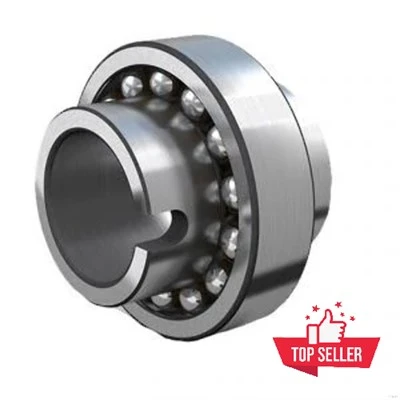
Self aligning bearings are one of the unique types of bearings that have the ability to self adjust to accommodate changing conditions in an application. Separating themselves from other bearing types they are free from the normal rigidity of installed standard bearings.Self-aligning bearings are a fully assembled double row set of balls accommodating misalignment during assembly and operation. The bearing’s outer ring has a concave raceway and an inner ring with a cylindrical or tapered bore. This type of bearing is available as open or with seals.
We offer the following Product Specifications
|
Inside Ø (mm): |
90 |
|
Outside Ø (mm): |
160 |
|
Width (mm): |
30 |
|
Max. Operating Temperature: |
+120°C |
|
Min. Operating Temperature: |
-40°C |
|
Tolerance for inside Ø (mm): |
0/-0,02 |
|
Tolerance for outside Ø (mm): |
0/-0,025 |
|
Tolerance for width (mm): |
0/-0,2 |
|
Bore: |
Tapered (1:12) |
|
Extended Inner Ring: |
No |
|
Tolerance Class: |
ABEC 1 / P0 |
|
Internal Clearance: |
CN (Standard) |
|
Seal: |
Open |
|
Ring Material: |
Rolling Bearing Steel |
|
Rolling Element Material: |
Rolling Bearing Steel |
|
Cage Material: |
Sheet Steel |
|
Sealing material: |
Without |
|
Type of lubrication: |
Oiled |
|
Lifetime lubricated: |
No |
|
Magnetic: |
Yes |
|
Norm: |
DIN 630 |
|
Permissible angular misalignment: |
2.5° |
|
Item weight: |
2,52 kg |
Advantages of Self-aligning Ball Bearings
Accommodate static and dynamic misalignment
The bearings are self-aligning like spherical roller bearings or CARB bearings.
Excellent high-speed performance
Self-aligning ball bearings generate less friction than any other type of rolling bearing, which enables them to run cooler even at high speeds.
Minimum maintenance
Because of low heat generation, the bearing temperature is lower, leading to extended bearing life and maintenance intervals.
Low friction
Very loose conformity between balls and outer ring keeps friction and frictional heat at low levels.
Excellent light load performance
Self-aligning ball bearings have low minimum load requirements.
Low noise
Self-aligning ball bearings can reduce noise and vibration levels, for example, in fans.
Self-aligning ball bearings consist of an outer ring, an inner ring, rolling elements, a cage to house the rolling elements, and seals that protect the balls from contaminants and other dirt. Due to their design, these elements make it possible for self-aligning bearings to counteract any static or dynamic misalignment of a shaft and housing assembly up to 3°. They also generate far less heat than other bearings due to the low friction within the bearing, allowing them to run cooler than other bearings at higher speeds. Self-aligning bearings work by utilizing a design with two rows of balls or rollers separated by a spherical raceway.


Outer ring: The outer ring of the bearings has a smooth spherical shape without raceways. The shape of the outer ring allows for slight movement within the bearing, which in turn allows the bearing to self-align.
Inner ring: The inner ring of the self-aligning bearing has two raceways that keep the balls and cage in place.
Rolling elements and cage: The rolling elements on self-aligning ball bearings are kept in place by the cage and the inner ring. As there is a loose configuration between the balls and the inner and outer ring, friction and frictional heat are very low. The cage is typically stamped steel, PA66, reinforced glass fiber, or machined brass.
Seal: A sealed self-aligning ball bearing ensures dirt and other contaminants don't affect the bearing rolling elements.
Application of Self-aligning Ball Bearings
Automobiles and Motorcycles
These bearings are used in various parts of vehicles, including transmission shafts.
01
Precision Instruments
Due to their low noise and high precision, these bearings are ideal for precision instruments.
02
General Machinery
These bearings are commonly used in various types of machinery due to their versatility.
03
Industrial Fans
These bearings can reduce noise and vibration levels, making them ideal for use in industrial fans.
04
Agriculture
These bearings are used in various agricultural machinery for their durability and self-aligning feature.
05
Installation of Self-aligning Ball Bearings
Adapter sleeves are typically used to mount self-aligning ball bearings.
Package with protective films that prevent outside influences from interacting with the components during transport. Ensure that these films are removed before mounting the bearing.
Apply oil or grease to the bearing's exterior surface.
Use oil to lubricate the adapter.
Open the adapter slightly and slide it onto the shaft with a spreader tool.
Place the bearing on the adapter sleeve after the adapter is in the correct position. To bring the bearing to the right place, use a nut if the shaft has threads; if not, use a bearing pusher kit or a small mallet.
Ensure that the bearing can rotate on the outer ring once it is in place. There should be no swiveling possible, but it should be free to rotate.
Lock the bearing in place with a locking washer by removing the nut, placing the washer and reinstalling the nut.
Packaging & Delivery

FAQ