


Ball Bearing
What is Ball Bearing
Ball bearings are rolling-element bearings which use balls to maintain the separation and distance between the bearing races. They are designed to reduce rotational friction while supporting both radial and axial loads.
Benefits of Ball Bearing
Reduced Friction:Ball bearings reduce friction between moving parts, allowing for smoother operation and less energy loss. This results in increased efficiency and less wear and tear on the components.
High Load Capacity:Ball bearings are designed to withstand large radial and axial loads. They distribute applied stresses evenly, reducing undue stress on individual components and improving overall system strength and durability.
Precise Motion Control:Because of their low friction and rolling contact, ball bearings provide precise and accurate motion control. This is especially useful in applications requiring precise positioning, smooth linear or rotational motion, and low deviations.
Low Noise and Vibration:The rolling action of ball bearings produces less noise and vibration compared to other bearing types. This is beneficial in applications where noise reduction and smooth operation are critical, such as in automotive or aerospace systems.
Wide Range of Sizes and Configurations:Ball bearings are available in a wide range of sizes, configurations, and materials to suit different application requirements. This versatility allows for customization and adaptability in various industries and machinery.



Why Choose Us
Advanced equipment
We take strong measures to ensure that we use the highest quality equipment in the industry and that our equipment is regularly and meticulously maintained.
Professional team
We have a team of highly skilled and experienced professionals who are well-versed in the latest technologies and industry standards. Our team is dedicated to ensuring our customers receive the best service and support.
Competitive price
We offer our products at competitive prices making them affordable to our customers. We believe high-quality products should not come at a premium, and we strive to make our products accessible to everyone.
Quality assurance
In terms of quality assurance, the company strictly follows the standards and specifications of the industry quality system. Use industry-leading testing equipment to ensure product quality and good reputation.
Professional service
We can accept factory inspection and cargo inspection at any time. Technical seminars, new product research and development, and perfect after-sales service.
High quality product
We always put the needs and expectations of our customers first, strive for excellence, continue to improve, seek every opportunity to do better, provide customers with the high-quality products they expect, and provide customers with the most satisfactory services at any time.
Different Types of Ball Bearing
Angular contact ball bearings
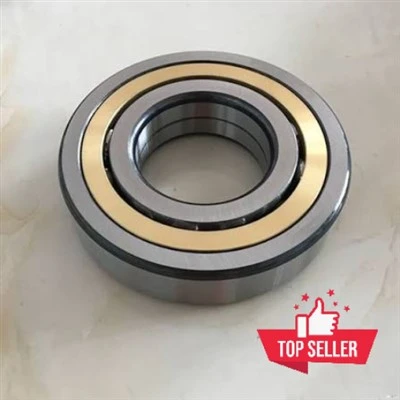
Angular contact ball bearings feature internal and external ring raceways, which are disconnected from each other in relation to the bearing axis. These bearings allow for the support of loads with a combination of axial and radial forces. It is not possible to dismantle these bearings and remove the races or balls. However, they may feature a relatively large number of balls for increased support of axial and radial loads. Such bearings allow for the optimisation of speed and minimisation of friction specific to different loads.
Axial deep groove ball bearings
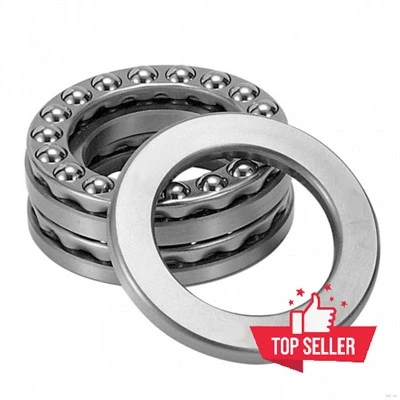
Axial deep groove ball bearings are suitable for highly specific purposes. They provide exclusive support for the axial forces projected by loads. The deep groove bearings consist of shaft-locating washers, housing-locating washers, and ball and cage assemblies. While some feature flat washers, others come complete with spherical housing-locating washers for the prevention and correction of static misalignment. It is absolutely essential to avoid the projection of any radial force upon these bearings.
Deep groove ball bearings
Deep groove ball bearings are the most commonly used variety of ball bearings and can be purchased in seal, shield, and snap-ring arrangements. The race dimensions within these kinds of bearings closely match the dimensions of the balls that are contained. They are also well suited to the support of weighty loads. Deep groove bearings provide both radial and axial support. However, the contact angle can' t be adjusted in order to vary the relative levels of such loads.
Linear ball bearings
Linear ball bearings are designed to provide free motion in one direction. They are the most widely used variety of linear slide and ensure a smooth precision motion along a single axis linear design. Featuring self-lubrication technology, these ball bearings allow for optimum performance and reliability. They are comprised of two linear ball bearing rows, integrated within four rods on alternate sides of the base.
Miniature ball bearings
Miniature bearings, otherwise known as instrument or micro bearings, have a nominal outside diameter of under 9mm. Small ball bearings have a nominal inner diameter of less than 10mm and an outer diameter upwards of 10mm. It is common for miniature and small ball bearings to be made from stainless steel due to the relatively low force of objects exerted upon them.
Radial ball bearings
Suitable for a wide range of purposes, radial ball bearings offer exceptional levels of performance. Also referred to as deep-groove and Conrad bearings, they have the capacity for either radial or axial loads as applied to the shaft. However, the combined application of such loads requires axial angular contact. Adjustment of the axial radial bearing angle allows for equal distribution of the axial and radial loads along the angular contact ball bearings.
Self-aligning ball bearings
Self-aligning ball bearings feature an inner ring and ball assembly, which is held securely within an outer ring with a spherical raceway. The design of these ball bearings is such that they can tolerate a minor angular misalignment occurring as a result of either deflections or incorrect mounting.
Thrust ball bearings
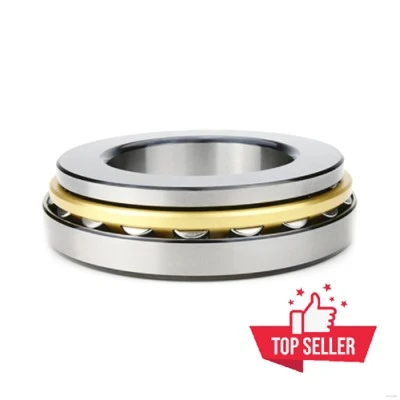
The thrust bearing is a unique variety of rotary bearing. As with other bearings, they facilitate interaction and movement between mechanical parts. However, their primary role is in the support of axial loads. Varieties of thrust bearings come complete with flat or aligning seats that correspond with the shape of the outer ring seat. Thrust bearings provide exclusive support for axial loads.
Function of Ball Bearings
Reduction of Friction
Commonly misconceived as creating ‘frictionless resistance’ , ball bearings reduce, rather than eliminate, friction. This misconception arises from overlooking the role of magnetic bearings, which is distinct from ball bearings. Ball bearings minimize friction between two surfaces, known as races. This reduction is vital as it stabilizes the races, lowers heat generation, reduces wear and tear, and diminishes the likelihood of part failure.
Linking Machine Parts
In any mechanical system, connecting different parts is necessary. Ball bearings fulfil this role by acting as joints. They are particularly useful in scenarios where one part rotates in relation to another, such as the connection between the fork and wheel of a bicycle. By using ball bearings, two components, often with different axes, are seamlessly integrated, ensuring smooth operation.
Load Bearing
The ability of a ball bearing to support weight depends on the width of its outer ring. Bearings are designed with a specific static load-bearing capacity, which influences their axial load limits. Some specialized bearings, like self-aligning bearings with double roll capacity, can handle heavier loads while maintaining durability. High-duty bearings can support loads up to 50% of their static load capacity, making them suitable for more strenuous applications.

Parts of Ball Bearings
These are the primary rolling elements. Steel balls are pivotal in the operation, facilitating smooth movement and reducing friction. They are positioned at the centre and enable the device to bear loads and rotate with minimal resistance.
Cage is a crucial component designed to maintain an even distribution of the balls within the bearing. Crafted from materials that minimize friction, the cage ensures that the balls are evenly spaced, preventing contact and maintaining consistent performance.
This smaller ring serves as the foundation on which the steel balls rotate. In industrial settings, the inner ring is the part that moves, connected to the moving components. The inner ring, along with the outer ring, is designed with specific dimensions to accommodate the steel balls, with both rings sharing similar bandwidths but differing in diameter.
The outer ring, or outer race, is the larger counterpart to the inner ring. It forms the external boundary under which the steel balls operate. Unlike the inner ring, the outer ring usually remains stationary. Both rings feature grooves of varying depths, ensuring that the balls can roll smoothly and without deviation.
An optional but highly recommended addition to the bearing is the shield. This component enhances the durability of a bearing by protecting the rolling elements from external contaminants like dust and moisture. Shields can be made from metal or plastic, with metal shields preventing dust accumulation and plastic ones offering increased resistance to water. Additionally, shields help in retaining lubricants like oil and grease, reducing maintenance needs, and prolonging the lifespan of a bearing.
How Are Ball Bearings Made
Deflashing
The flash line, the lip left by the forming dies, is ground off as balls roll between heavy, cast iron plates.
Soft Grinding
Similar to deflashing, except that a fine grit grinding stone is used to improve precision.
Heat-treating
Carbon steel balls are next carburized and hardened. Heat treatment allows for the desired hardness and case depth.
Descaling
This step takes away the residues and small burrs from the heat-treating process.
Hard Grinding
Slow, methodical grinding ensures proper sizing and sphericity, with tolerances as close as ±.0001".
Lapping
There are different types of proprietary lapping processes can finish balls to the requirements of ISO 3290 Grade 10 - 48.
Finishing
State of the art chemical and mechanical processes give the precision balls their final smoothed finish for increased durability and product longevity.
Inspection
All ball bearings pass through at least two 100% inspection stages using cutting edge automated inspection techniques.
How Roller Bearings Are Different From Ball Bearings

Use Of Rolling Element
In both Roller Bearing and Ball Bearing, there is a rolling element, cage and bearing rigs that consist of a bearing. When the rolling element in the bearing is a spherical ball then it is simply termed as a ball bearing.
Roller Bearings Are Designed To Withstand Heavy Loads
The Roller Bearings use rollers in the place of balls which makes them capable to be used in radial and axial loads where misalignments are possible. In varied cases, they are used in automobiles like trucks, buses and vehicles.


Distribution Of Loads
In the case of ball bearing, they work to transfer loads from outer raceway to inner raceway while in roller bearing it distributes the load over the large area making it desirable to manage load in a better way as compared to ball bearing. This happens due to line contact which makes it capable of handling resistance and shocks.
Which Bearing Is Better
Both ball bearings and roller bearings may have different capacities, the roller bearing may be good in terms of shock and high resistance conditions while ball bearings might be good for operability at higher speeds.

Why Are Ball Bearings so Important in Industrial Operations and Businesses
As factories, manufacturing machines and industry operations have developed, more varied applications are needed to reduce time, space and downtime.
With ball bearings holding the ability to reduce ware between parts, effectively combine both moving and static components without manual operation as well as carrying specified load amounts, they can greatly reduce the likelihood of mechanical failure.
Industries such as the automotive trade buy ball bearings in Singapore and beyond to provide engines with friction-reduced resistance to avoid temperature climbs and overloads in the component. Making use of ball bearings for friction-reduction improves the overall performance and efficiency of a car while lowering CO2 emissions.
How Does A Ball Bearing Work
Load Distribution
When a load or force is applied to the bearing, it is transmitted through the outer race to the balls and then to the inner race. The load is distributed evenly among the balls, which reduces the pressure on any individual point of contact.
Rolling Motion
The balls in the bearing rotate freely between the raceways, allowing smooth rolling motion with minimal friction. The spherical shape of the balls ensures that they contact the raceways at a small contact area, reducing friction and wear.
Separation of Races
The balls act as rolling elements that separate the inner and outer races, preventing direct contact between them. This separation reduces friction, as compared to sliding contact between the races.
Cage or Retainer
The cage or retainer holds the balls in position, evenly spacing them around the bearing. It prevents the balls from colliding with each other and helps maintain their proper alignment within the raceways.
Lubrication
To further minimize friction and wear, ball bearings are often lubricated with grease or oil. The lubricant forms a thin film between the balls and the raceways, reducing friction and dissipating heat generated during operation.
Efficiency and Load Capacity
The design of ball bearings allows for efficient transmission of rotational motion with relatively low friction. The use of rolling elements (balls) distributes the load more evenly, allowing ball bearings to handle both radial and axial loads.
Ball bearings are important components in many machines, used to reduce friction between moving parts. Therefore, it is important to lubricate them regularly to maintain proper function. This article will discuss how often bearings should be lubricated, what type of lubricant should be used, and how often maintenance is required.
When it comes to bearing lubrication, many factors must be considered, including the environment in which the machine operates, the load on the ball bearing, and other variables. Generally speaking, most ball bearings require lubrication at least every six months or after 500 hours of operation, whichever comes first. However, it is recommended that depending on the operating conditions of the machine, more frequent lubrication intervals may be required. For example, if the environment is particularly dusty or wet, additional lubrication and more careful monitoring for signs of wear may be required.
The type of oil or grease used when lubricating ball bearings is also important because different types have different properties. Generally speaking, light mineral oils containing EP (extreme pressure) additives are best for applications with higher system loads, while greases formulated specifically for high-temperature use can help prevent long-term corrosion. It is also important not to over-lubricate as this may cause excessive heating and excessive wear of components, so keep a close eye on your machine and check regularly for signs of damage caused by insufficient or excessive lubrication.
As far as ball bearing maintenance requirements go, it's a good idea to check them regularly for any signs of damage or degradation, such as pitting or rust, and to check seals for leaks or worn surfaces from frequent use. Regular cleaning with compressed air helps remove dust buildup within the housing, allowing all components to remain debris-free during regular operation. Following these steps will ensure your equipment remains running smoothly and efficiently without unplanned downtime due to parts failure or improper care and maintenance procedures.
Our Factory
Lasting Bearing Group Co., Limited founded in 2008, is a company specializing in the manufacturing and sales of bearing transmission parts. Located in Hong Kong, and we have set up offices in some parts of the world, we are committed to providing our customers with high quality bearing products and high quality service. Since its establishment, the company has been adhering to the product quality and quality service as the center of the business philosophy, gradually become a leader in the industry.

