


Roller Bearing
What is Roller Bearing
Roller bearings, also referred to as roller-element bearings, operate on the same fundamental principle as ball bearings: efficiently support loads while minimising friction. The key distinction lies in their shape and construction. While ball bearings use spherical balls, roller bearings employ cylindrical rollers, including cross and linear roller bearings.
Benefits of Roller Bearing
Reduced Friction:Roller bearings significantly decrease friction compared to plain bearings, leading to energy savings and lower heat generation.
Enhanced Durability:The rolling motion reduces wear, extending the lifespan of components and reducing maintenance requirements.
High Load Capacity:Tapered Roller bearing can handle heavy loads while maintaining their performance, making them suitable for various industrial applications.
Precise Motion Control:These bearings offer precise control over motion, crucial in applications requiring accurate positioning and alignment.
Versatility:With various types available, roller bearings can be tailored to suit specific application requirements.








Why Choose Us
Advanced equipment
We take strong measures to ensure that we use the highest quality equipment in the industry and that our equipment is regularly and meticulously maintained.
Professional team
We have a team of highly skilled and experienced professionals who are well-versed in the latest technologies and industry standards. Our team is dedicated to ensuring our customers receive the best service and support.
Competitive price
We offer our products at competitive prices making them affordable to our customers. We believe high-quality products should not come at a premium, and we strive to make our products accessible to everyone.
Quality assurance
In terms of quality assurance, the company strictly follows the standards and specifications of the industry quality system. Use industry-leading testing equipment to ensure product quality and good reputation.
Professional service
We can accept factory inspection and cargo inspection at any time. Technical seminars, new product research and development, and perfect after-sales service.
High quality product
We always put the needs and expectations of our customers first, strive for excellence, continue to improve, seek every opportunity to do better, provide customers with the high-quality products they expect, and provide customers with the most satisfactory services at any time.
Types of Roller Bearings
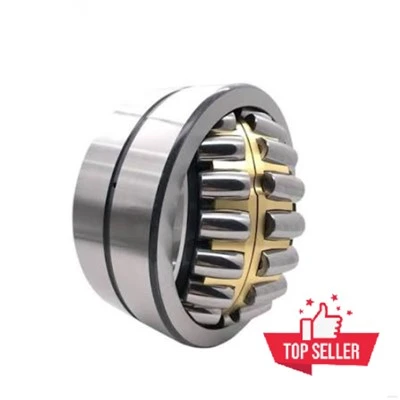
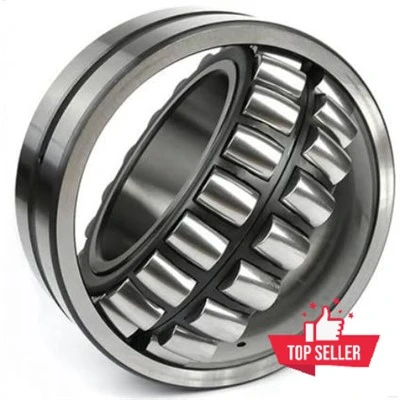
Spherical roller bearings consist of an inner ring with two inclined racetracks, an outer ring with a spherical raceway, spherical rolling elements, cages, and, in some designs, internal center rings. Their construction allows them to carry heavy axial and radial loads in any direction at high speeds, even when dealing with misalignment or shaft deflection. They come with cylindrical or tapered bores ranging from 20 mm to 900 mm, providing versatility in installation with or without a sleeve adapter.
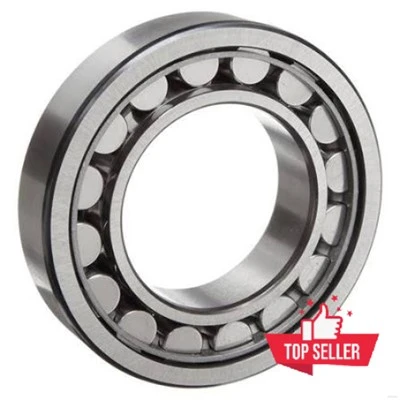
Cylindrical roller bearings feature rollers in linear contact with the raceways, but these rollers are not true cylinders; they have crowned or floating ends to relieve stress. Available in single- or double-row configurations, they offer greater radial load capacity in high-speed applications, although their thrust load capacity is moderate.
Tapered roller bearings are designed with the principle that cones can roll over each other without slipping. They consist of inner and outer rings and rows of non-separable cone assemblies. Tapered rollers run on conical raceways, allowing them to withstand heavy radial, axial, and thrust loads, typically in moderate-speed applications. Unlike cylindrical bearings, tapered roller bearings excel at managing significant thrust loads and are available in both inch and metric sizes.
Needle roller bearings feature thin and long rollers positioned horizontally within the bearing casing. They may have tapered or hemispherical ends to maintain roller position or facilitate free movement. Needle bearings, a variant of cylindrical bearings, can withstand high radial load capacities in applications requiring high-speed rotational accuracy. Their design allows for versatile use of the mating surface as inner or outer raceways, and they provide large oil reservoirs while maintaining a minimalistic cross-section design. Needle rollers can be found with or without an inner ring.
Thrust roller bearings are specialised rotary bearings designed to handle high loads in challenging environments. They can feature various rolling elements, including needles, tapered, spherical, or cylindrical rollers, which separate the bearing rings. Thrust rollers excel at handling axial and thrust loads parallel to the shaft's axis. The speed rating varies depending on the type of rolling element used, with ball roller thrust bearings suitable for high-speed applications and cylindrical roller thrust bearings designed for moderate speeds.
Internal Geometry of Roller Bearings
In a cylindrical roller bearing running under a load, force is transmitted from one bearing ring to the other through the rolling elements. Even moderate loads can produce stresses of tens, even hundreds of thousands of pounds per square inch. These internal stresses have a significant impact on a bearing's life and performance. The concepts central to the internal bearing geometry of roller bearings are radial play, roller end play, and free angle of misalignment. We define these concepts below.

Selecting the Right Roller Bearing
Load Capacity
Determine the magnitude and direction of the load the bearing will support, whether it’s radial, axial, or a combination of both.
Speed
Consider the rotational speed of the application as excessive speed can impact bearing performance.
Environmental Conditions
Evaluate the operating environment, including temperature, humidity, and exposure to contaminants, as these factors can affect bearing life.
Alignment and Misalignment
Determine if the application requires the bearing to handle misalignment, and select a suitable type accordingly.
Space Constraints
Consider the available space within the machinery, as compact solutions like needle roller bearings may be necessary in tight quarters.
Precision Requirements
Some applications demand high precision, such as those in the medical or semiconductor industries.
The Difference Between Roller and Ball Bearings
If you need bearings for an application that demands speed but doesn't have a heavy load, ball bearings are likely the best choice. On the other hand, roller bearings are best for heavy-duty applications with shocks.
Manufacturers frequently sell ball bearings as assemblies. When it's time to replace them, you'd need to replace the unit, not individual parts. Roller bearings are different; you can replace the inner and outer rings individually if necessary.
Because ball bearings are versatile, the single-row bearing style is the standard. You can use them in various applications regardless of manufacturers. However, roller bearings don't have a specific standard, so particular applications will require a specific bearing brand, type, size, and so on.
Another difference between ball and roller bearings is the possibility of usage following the misalignment of a roller element. For example, ball bearings could still work if a ball has an angular misalignment up to 0.004 inches between the bearing and the shaft. Roller bearing misalignments are less forgiving and could stop functioning correctly if a roller falls too far out of place.
Roller bearings work by using cylindrical or spherical rollers to reduce friction between two surfaces that are in contact with each other. The rollers are placed between two races, which are the inner and outer rings of the bearing. As the shaft rotates, the rollers roll along the raceways, reducing friction and allowing the shaft to rotate smoothly.
The specific design depends on the type of roller bearing being used. For example, ball bearings use balls that roll between the two races, while cylindrical roller bearings use cylinders that roll along their sides in the tracks of the races. Tapered roller bearings have elements with a larger diameter at one end than the other, which gives them a slight angle and allows them to support both radial and axial loads. Needle roller bearings use long, thin cylinders that are often tapered to points to keep them captive.
Roller bearings are designed to carry loads with minimum friction and can support both radial and axial loads. They are commonly used in rotary applications and can be customized for specific applications by using flanges, cages, and multiple-bearing rows. Roller bearings have several advantages over sliding contact bearings, including low starting and running friction, accuracy of shaft alignment, and long bearing life. However, they also have some disadvantages, such as more noise during operation and susceptibility to particulate contamination.
Configurations of Roller Bearings
Locating and non-locating bearing configuration
In a locating configuration, the bearing support touches the shaft axially. On the other hand, a non-locating bearing arrangement provides axial displacements due to the difference in thermal expansion or strain between the shaft and the housing. Furthermore, it offers higher component tolerance, affecting the distance between the bearings.
Adjusted bearing configuration
In an adjusted bearing configuration, the shaft moves back and forth; one bearing support allows for positive displacement while the other (cross-located) enables shaft location in the opposite direction. Users must first adjust the clearance when mounting the component. Examples of roller bearings with such a configuration are the tapered roller bearings (discussed below).
Floating bearing configuration
In a floating arrangement, cross-located bearing and the contact components freely move axially or radially over varied distances between the two endpoints. The difference in thermal expansion between the shaft and housing and the component's tolerances determines the floating distance. Spherical and deep-grooved bearings are examples of roller-element bearings with a floating configuration.

The Applications of Roller Bearings
Automotive industry
Roller bearings are widely used in the automotive industry, such as transmissions, engines, transmission systems, etc. In these situations, roller bearings are used to support the rotating shaft, transmit torque and reduce friction, improving the performance and reliability of the car.
Railway transportation
Roller bearings are widely used in railway locomotives and EMUs, such as wheel bearings, suspension bearings, etc. These bearings need to withstand large loads and impacts, while also requiring high reliability and long life.
Aerospace
In the aerospace field, roller bearings are also widely used due to high-speed rotation and high-precision requirements. For example, main shaft bearings in aircraft engines, rotor bearings in helicopters, etc.
Industrial machinery
Roller bearings are widely used in industrial machinery, such as motors, reducers, pumps, compressors, etc. In these occasions, roller bearings are used to support the rotating shaft, transmit power and reduce friction, improving mechanical efficiency and reliability.
Medical equipment
In some medical equipment, such as medical centrifuges, dental drills, etc., roller bearings are also required. In these situations, roller bearings need to have high precision, low noise, and no pollution.
Components of Roller Bearings
Inner Ring
The inner ring, also known as the inner race or cone, is the component that attaches to the rotating shaft. It serves as the primary load-carrying surface for the bearing and directly interacts with the rollers. The inner ring's design and geometry are crucial for bearing performance, and it must be properly fitted to the shaft to ensure efficient load distribution.
Outer Ring
The outer ring, often referred to as the outer race or cup, surrounds the inner ring and provides a stationary mounting surface for the bearing. It interfaces with the housing or machine structure. Just like the inner ring, the outer ring's design plays a vital role in bearing operation, and it must be securely positioned within the housing.
Rollers
Rollers are the load-carrying elements of the bearing. These cylindrical, tapered, spherical, or needle-shaped components transmit the applied forces and enable smooth rotation. The design of the rollers varies depending on the bearing type and application. Cylindrical rollers are typically found in cylindrical roller bearings, while tapered rollers are used in tapered roller bearings, and so on.
Cage (Roller Retainer)
The cage, also known as the roller retainer or separator, is a crucial component that maintains the spacing and alignment of the rollers within the bearing. It prevents the rollers from coming into direct contact with each other, which could lead to friction and wear. Additionally, the cage aids in evenly distributing the lubricant within the bearing. The material and design of the cage can differ based on the specific bearing requirements.
Our Factory
Lasting Bearing Group Co., Limited founded in 2008, is a company specializing in the manufacturing and sales of bearing transmission parts. Located in Hong Kong, and we have set up offices in some parts of the world, we are committed to providing our customers with high quality bearing products and high quality service. Since its establishment, the company has been adhering to the product quality and quality service as the center of the business philosophy, gradually become a leader in the industry.

