


Ceramic Bearing
What is Ceramic Bearing
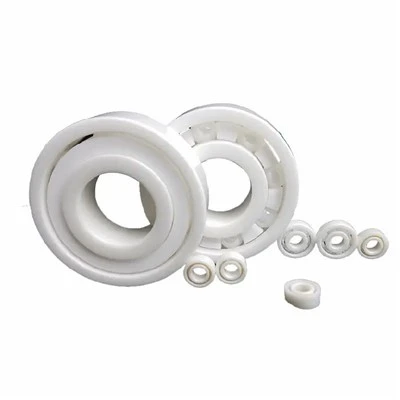
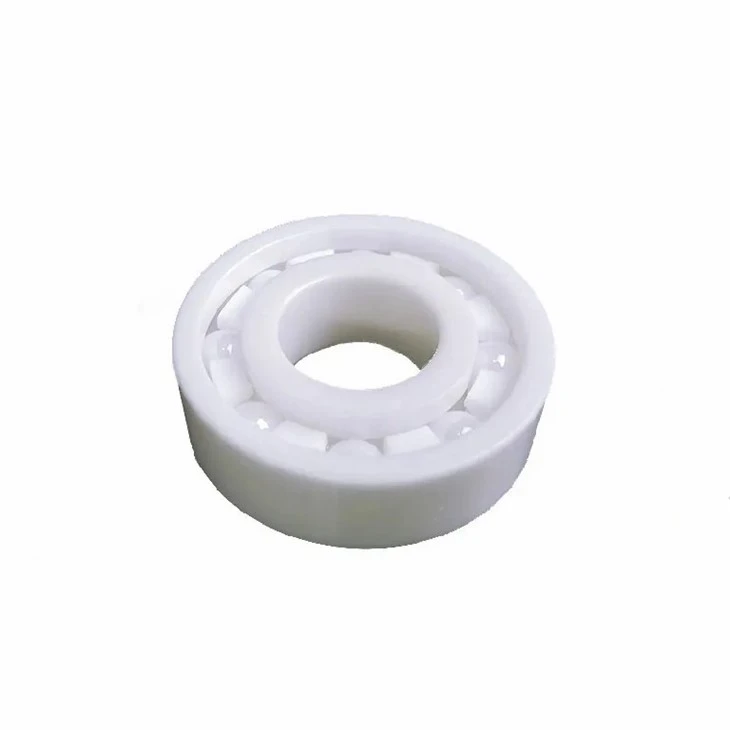
Ceramic hybrid bearings are comprised of ceramic rolling elements (balls) enclosed in a ferrous (typically steel) inner and outer race. Since these bearings are constructed from many materials, they often operate in hybrid capacities.
Benefits of Ceramic Bearing
Enhanced Durability:Ceramic Bearings are renowned for their exceptional hardness, providing a level of durability that surpasses traditional steel bearings. The enhanced durability translates to a longer lifespan and reduced maintenance requirements.
Reduced Friction and Heat Generation:One of the standout features of Ceramic Bearings is their ability to reduce friction and heat generation. The smooth surface finish of ceramic materials, combined with their low coefficient of friction, results in less energy loss due to friction, ultimately leading to more efficient operation.
Corrosion Resistance:Ceramic Bearings exhibit remarkable resistance to corrosion, making them well-suited for applications in harsh environments or those involving exposure to corrosive substances. This resistance ensures the longevity of the bearing and maintains its performance integrity over time.
Lightweight Nature:Ceramic Bearings are inherently lighter than steel, contributing to the overall weight reduction of the bearing assembly. This feature is crucial in industries where minimizing weight is a priority, such as aerospace and automotive applications. The reduced weight not only enhances performance but also contributes to energy efficiency.
High Temperature Tolerance:Ceramic Bearings excel in high-temperature environments, maintaining their structural integrity and performance even when exposed to extreme temperatures. This characteristic makes them invaluable in applications where conventional bearings may falter due to thermal stress.
Why Choose Us
Advanced equipment
We take strong measures to ensure that we use the highest quality equipment in the industry and that our equipment is regularly and meticulously maintained.
Professional team
We have a team of highly skilled and experienced professionals who are well-versed in the latest technologies and industry standards. Our team is dedicated to ensuring our customers receive the best service and support.
Competitive price
We offer our products at competitive prices making them affordable to our customers. We believe high-quality products should not come at a premium, and we strive to make our products accessible to everyone.
Quality assurance
In terms of quality assurance, the company strictly follows the standards and specifications of the industry quality system. Use industry-leading testing equipment to ensure product quality and good reputation.
Professional service
We can accept factory inspection and cargo inspection at any time. Technical seminars, new product research and development, and perfect after-sales service.
High quality product
We always put the needs and expectations of our customers first, strive for excellence, continue to improve, seek every opportunity to do better, provide customers with the high-quality products they expect, and provide customers with the most satisfactory services at any time.
Ceramic Bearings vs Steel Bearings Key Differences
Friction
Ceramic balls are rounder, lighter, harder, and smoother than steel balls due to their lack of porousness. This reduces friction as well as energy loss, allowing your equipment to run more efficiently (and for longer) with ceramic ball bearings. Because of their relative smoothness, ceramic ball bearings require less lubrication than steel bearings.
Corrosion
Steel balls will corrode over time, even with perfect lubrication, while ceramic balls do not corrode. In fact, ceramic hybrid ball bearings may last up to ten times longer than steel bearings when it comes to corrosion.
Bearing Races
Ceramic balls have a much lower elasticity than steel balls, which is important to keep in mind when considering an upgrade to ceramic bearings. If you experience heavy spindle loads or spindle crashes, ceramic balls are more likely to cause damage (brinelling) to the bearing raceways. Over time the dents in the raceways grow larger and eventually lead to spindle failure.
Conductivity
Ceramic bearings are non-magnetic and non-conductive, so they are often preferred in applications where electrical conductivity is a concern — for example, if you have an electric motor controlled by a variable frequency drive.
Precision
When it comes to precision, the ABEC ratings of the spindle bearings we use are high enough that the difference between ceramic and steel bearings is minimal. The sole difference is that ceramic bearings will not thermally expand as much as steel bearings, and so will not generate as much heat at high speeds or have as much measurable thermal growth.
Cost
This is typically the biggest difference between ceramic and steel bearings. Ceramic bearings are, on average, are 50% more expensive than steel bearings. As such, ceramic bearings are not always a cost effective improvement over steel bearings.
Factors to Consider When Choosing Ceramic Bearings

Load Capacity and Speed
When selecting ceramic bearings for your industrial machinery, it is essential to consider the load capacity and operating speed requirements. Ceramic bearings excel in applications with high loads and high-speed rotations. Determine the maximum load and speed your machinery will encounter to ensure the chosen ceramic bearings can handle the demands effectively.
Temperature and Environment
Take into account the temperature range and environmental conditions in which your machinery operates. Ceramic bearings are known for their ability to withstand extreme temperatures, making them suitable for applications in both hot and cold environments. Additionally, consider factors such as exposure to dust, chemicals, or moisture, as these may influence the choice of ceramic bearing material.

Cost and Maintenance
While ceramic bearings offer numerous benefits, they tend to be more expensive than traditional steel bearings. Evaluate your budget and weigh the long-term advantages of ceramic bearings against the initial investment. Additionally, consider the maintenance requirements of ceramic bearings, as certain applications may require specialized maintenance procedures or lubrication.
Compatibility with Machinery
Ensure that the chosen ceramic bearings are compatible with your industrial machinery. Consider factors such as the shaft and housing fit, as well as the required clearance or preload. Consult with bearing manufacturers or experts to determine the best fit and compatibility for your specific machinery.

Global Ceramic Ball Bearings Market Drivers
High Performance and Durability
When compared to conventional steel bearings, ceramic ball bearings provide superior performance, increased durability, and a longer lifespan. They are appropriate for demanding applications because of their well-known resistance to wear, corrosion, and high temperatures.
Growing Industrial Automation
As industrial automation becomes more prevalent in the manufacturing and other industries, there is a greater need for dependable and high-precision bearings. Because of its great wear resistance and minimal friction, ceramic ball bearings are the ideal choice for automation applications.
Growing Need in Aerospace and Defence
Industries that rely on components resistant to harsh environments include aerospace and defence. Aerospace applications are using ceramic ball bearings more frequently due to its lightweight design and capacity to function in hot conditions.
Growing Automotive Sector
Ceramic ball bearings are widely used in the automotive sector, especially in high-performance and racing automobiles. These bearings are becoming more and more popular in different automotive applications because to the requirement for improved performance and fuel efficiency.
Growth of Wind Energy
The wind turbine systems used in this industry depend on dependable and effective bearings. Because of their superior resistance to wear and tear and reduced friction, ceramic ball bearings are becoming more and more popular in this market niche.
Applications in Medicine and Semiconductor Manufacturing
Precision and dependability are essential in the manufacturing of semiconductors and medical equipment, both of which heavily rely on ceramic ball bearings. They are appropriate for certain applications in these industries due to their non-magnetic and non-conductive qualities.
Environmental Aspects
The usage of ceramic ball bearings, which can enhance energy efficiency and extend equipment life, is growing in popularity as sustainability becomes an increasingly important issue.
Technological Developments
As ceramic materials and manufacturing techniques continue to evolve, ceramic ball bearings’ performance and characteristics improve, which is accelerating their use across a range of sectors.
Applications of Ceramic Bearings
Aerospace
The high-speed, high-temperature environment of jet engines is a prime application for ceramic bearings. Their ability to withstand thermal shock and their low weight make them an ideal choice for aerospace applications.
Automotive
In the automotive industry, ceramic bearings are employed in areas like transmissions, pumps, and electric motors. Their ability to operate at lower temperatures and higher speeds while reducing weight contributes to improved fuel efficiency and performance.
Medical
The biomedical field employs ceramic bearings in various devices, including dental drills and medical imaging equipment. Their hardness and corrosion resistance, combined with their capacity for high speeds, makes them an effective choice.
Types of Ceramic Bearings
Radial Ceramic Bearings
Radial ceramic bearings, also known as deep groove ceramic bearings, are designed to support radial and moderate axial loads in both directions.
These bearings are commonly used in applications requiring high speeds, low friction, and minimal maintenance.
Ceramic Angular Contact Bearings
Ceramic angular contact bearings are designed to support combined loads, handling both radial and axial loads simultaneously.
These bearings are ideal for applications requiring high precision, rigidity, and high-speed performance. The contact angle of the bearing determines its ability to support axial loads, with a higher contact angle providing greater axial load capacity.
Ceramic Thrust Bearings
Ceramic thrust bearings are designed to support axial loads and are often used in applications where high axial load capacity, low friction, and high-speed performance are essential.
These bearings can be found in various industries, such as aerospace, automotive, and machine tools.
Ceramic Insert Bearings
Ceramic insert bearings are designed to be easily mounted onto a shaft and secured within a housing. These bearings are ideal for applications with easy installation and maintenance, such as agricultural equipment, conveyors, and fans.
Ceramic insert bearings typically feature a set screw or locking collar mechanism to secure the bearing onto the shaft. They can be found in various ceramic materials to cater to different application needs.
Ceramic Self-Aligning Bearings
Ceramic self-aligning bearings are designed to compensate for misalignment between the shaft and housing, reducing stress on the bearing components.
These bearings are suitable for applications where misalignment is likely to occur, such as in heavy machinery, conveyors, and gearboxes.
Ceramic Bearings Production Process
Powder Preparation
Ceramic materials are ground into fine powders, often adding binders and other additives to facilitate the subsequent forming process.
Forming
The ceramic powder is shaped into the desired form, such as balls or races, using pressing, injection molding, or extrusion methods.
Sintering
The formed parts are heated at high temperatures, causing the ceramic particles to bond and form a solid, dense structure.
Machining and Grinding
The sintered ceramic balls and races are then machined and ground to achieve the required precision and surface finish.
Market Growth and Size:The global market is experiencing robust growth, driven by the increasing demand for these bearings across various industries. The market size is expanding as these bearings become integral components in critical applications.
Major Market Drivers:Key drivers include the rise in industrial applications, rising adoption in electric vehicles (EVs), advancements in manufacturing technologies, and the expanding aerospace and defense sector. These factors collectively propel the market forward, fostering substantial growth.
Technological Advancements:Technological advancements, such as precision engineering and advanced manufacturing processes, contribute significantly to the market's expansion.
Industry Applications:They find applications across diverse industries, including aerospace, automotive, manufacturing, and more.
Key Market Trends:Key trends include increasing demand for lightweight solutions in the automotive and aerospace sectors, the emphasis on sustainability and energy efficiency, and the growing role of these bearings in emerging technological applications.
Geographical Trends:Geographically, the United States is witnessing substantial market growth, driven by the growing industrialization, increasing investments in aerospace and defense, and the rising adoption of EVs.
Competitive Landscape:The competitive landscape is characterized by the presence of major players focusing on product innovation, strategic partnerships, and mergers and acquisitions. Companies are keenly investing in research and development to stay ahead in the competitive market.
Challenges and Opportunities:Challenges include the high initial costs of bearings and the need for specialized manufacturing processes. However, opportunities lie in addressing these challenges through cost-effective production methods and expanding applications in emerging industries.
Future Outlook:The market appears promising, with sustained growth anticipated, driven by the continuous demand for high-performance bearings in various industries, ongoing technological advancements, and the global push towards sustainable and energy-efficient solutions. The market is poised for further expansion, presenting ample opportunities for industry players.
Our Factory
Lasting Bearing Group Co., Limited founded in 2008, is a company specializing in the manufacturing and sales of bearing transmission parts. Located in Hong Kong, and we have set up offices in some parts of the world, we are committed to providing our customers with high quality bearing products and high quality service. Since its establishment, the company has been adhering to the product quality and quality service as the center of the business philosophy, gradually become a leader in the industry.

