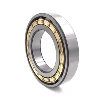
A linear bearing is a linear motion system used for linear travel in conjunction with a cylindrical shaft. Since the bearing ball is in point contact with the outer shell of the bearing, the steel ball rolls with the minimum frictional resistance, so the linear bearing has small friction and is relatively stable, does not change with the bearing speed, and can obtain smooth linear motion with high sensitivity and high precision. The consumption of linear bearings also has its limitations. The most important one is that the impact load capacity of the bearing is poor, and the bearing capacity is also poor. Secondly, the vibration and noise of linear bearings are relatively large during high-speed motion. Automatic selection of linear bearings is included. Linear bearings are widely used in sliding parts of precision machine tools, textile machinery, food packaging machinery, printing machinery and other industrial machinery
Since the bearing ball is in point contact with the bearing, the operating load is small. Steel balls rotate with minimal frictional resistance, resulting in smooth motion with high precision.
Plastic linear bearing is a kind of linear motion system with self-lubricating characteristics. The biggest difference between it and metal linear bearing is that metal linear bearing is rolling friction, and there is point contact between the bearing and the cylindrical shaft, so it is suitable for low-load and high-speed motion; and Plastic linear bearings are sliding friction, and there is surface contact between the bearing and the cylindrical shaft, so this type is suitable for high-load, medium-low speed motion.
Apr 15, 2023
Leave a message
Introduction To Linear Bearings
Previous
Linear Bearing FeaturesNext
No InformationSend Inquiry